
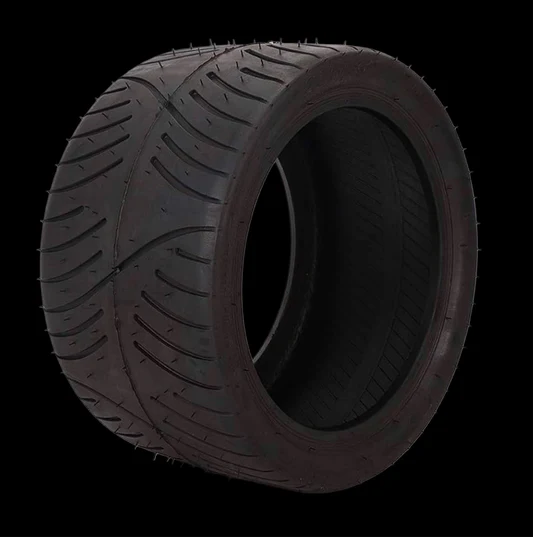
A Low profile tires were originally developed for sports and saloon car racing. The advantages are that they handle better on dry smooth pavement. They reduce lean in corners, and they grip the road better. They are generally mounted on larger diameter wheels which allow for bigger brake discs and calipers too.
But the reason must car buffs are putting them on their older family sedans is appearance. Most of the time such backyard stylists have not thought things out very carefully because big rims and “rubber band tires,” as my son refers to them, have significant disadvantages.
While it is true that they will help in high-speed cornering and braking, they will also make a car’s ride rather rough and truck-like. People aren’t aware of it, but tires are the most important part of their classic’s suspension system. And a car’s suspension and steering were designed and adjusted to work with the diameter and width of the wheels that originally came on the car.
If you go to larger diameter wheels and tires than your car had originally, you will change your suspension and steering, not to mention the rear drive ratio. Putting on bigger tires at the rear is like going from a 4:11 rear end to a 3:56. You will have a higher top speed, but less torque off the line. Bigger diameter wheels will also make your speedometer read slower than you are actually going, so be mindful around the men in blue if you install them.
Low profile tires are also more vulnerable to punctures and routine road damage from potholes and rough roads. Keep in mind too that your rims are much more susceptible to rim rash due to them scraping curbs, and those fancy polished alloy rims aren’t cheap. In addition to all of that, proper inflation is much more critical with low profile tires.

Reviews
There are no reviews yet.